The body as algorithm, the algorithm as body.
About Intuition Machine
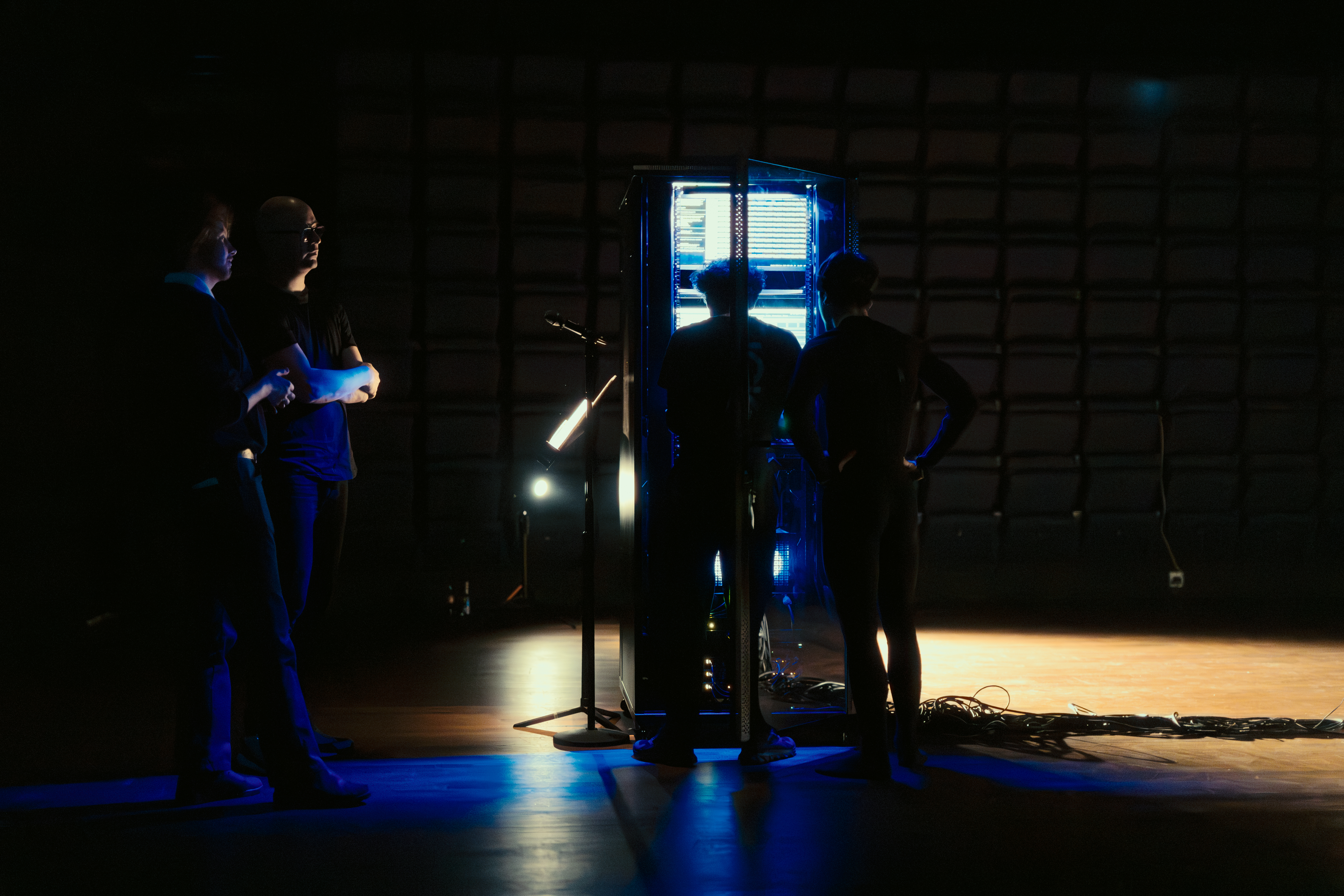
The installation consists of a holographic body emerging from dozens of LED lights. It moves continuously and changes shape in response to the impulses of a dancer. At the center of the installation, a dress appears to breathe while a shiny sphere moves synchronously with it. The digital body is driven by choreographic data that is captured from the movements of the performer. These data flow through the structure via a server and activate an algorithm that transforms them into sound. Each movement of the system and the dancer instantly adjusts and recomposes the music in real time. The hologram progresses through seven different stages where artificial intelligence and dance fragments converge. This creates a dynamic interaction between physical and digital processes, with the installation serving as a bridge between both worlds.
Upcycling between the physical and the digital
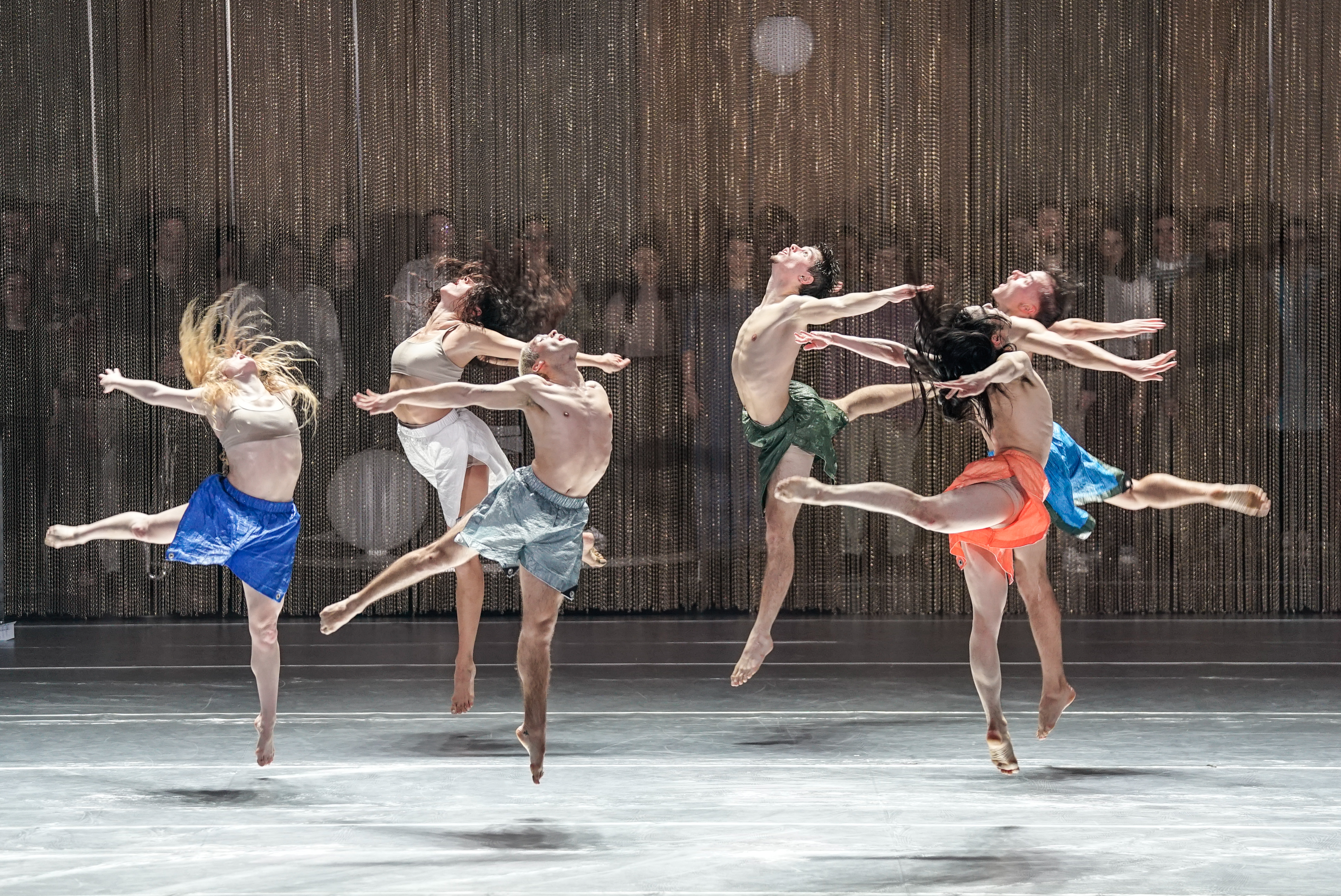
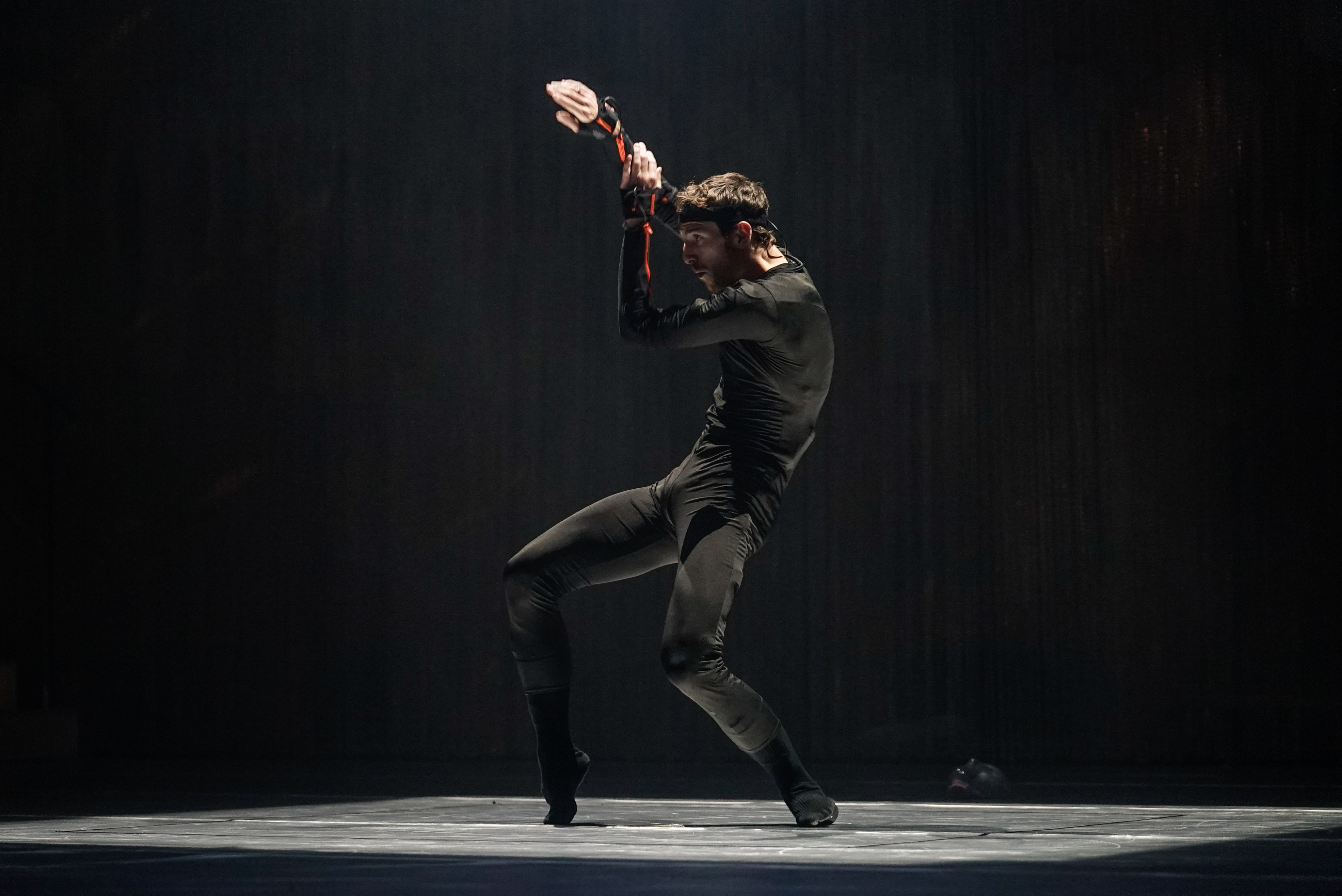
The installation applies the concept of upcycling by reusing design elements and data from previous installations. Movements and sounds from earlier performances are also repurposed and activated in a new context. The system’s source code consists of data from seven dance fragments, captured and developed during the creation process of WE, the LUST, a production that premiered at the Philharmonie de Paris in December 2024. During that performance, the installation acted as a visual introduction, welcoming the audience as they entered. On stage, a dancer wore special sensors that controlled live sound layers through their movements. The recorded data remains active in the system and is continuously reused and adapted. It serves as the foundation for new variations and unexpected combinations of movement and sound. Each interaction between humans and algorithms adds new layers to the digital memory of the installation, further deepening and developing the relationship between humans and artificial intelligence.
The AI-Toolbox
One of the inspirations and starting points for the installation is the AI-Toolbox, a technological application developed within the EU Horizon Heritage project PREMIERE. This project is a collaboration between scientists and artists working with artificial intelligence (AI) and extended reality (XR). The AI-Toolbox enables the capturing, analyzing, and translating of movements into digital choreographies, sounds, or moving images. The system is designed for real-time use, allowing dancers to interact directly with a network of machines. They can influence audiovisual elements through their movements. During the creation process of WE, the LUST, three programmers refined the sounds and 3D visuals, tailoring them to the choreographic and musical style of Emio Greco, Pieter C. Scholten, and Franck Krawczyk. In this context, the AHK-IDlab in Amsterdam hosted the Experimental Ateliers for the first time. These ateliers were initiated as part of the ICK research trajectory The Intuitive Body & AI. During the ateliers, it became clear how the AI-Toolbox could inspire artists to explore new forms of creation and development within their respective fields
The future of the digital dance experience
Since the installation’s first presentation in Paris, the creative team has been exploring ways to expand its capabilities. The central question is whether the hologram, powered by input from the AI-Toolbox, can autonomously create new forms of dance. The ongoing research investigates how the digital body can respond in real-time to a performer by capturing, analyzing, projecting, and re-transforming movements. The audience too can interact with the installation via a special camera, and intuitively move their bodies to communicate with the hologram. In the future, the hologram could become an increasingly refined and precise means of expression. It might even transcend the physical boundaries of the installation, directly interacting with passersby by mirroring their movements or translating them into new forms of interaction. There are also exciting educational opportunities, such as developing interactive learning tools that challenge dance students to explore and expand their technique, creativity, and improvisation in unexpected ways. The installation could evolve into a dynamic canvas, transforming physical movements into abstract images and fluid patterns. As a flexible, kinetic structure, it would not only respond to environmental stimuli but actively transform based on them. It could even evolve into an intelligent system that reflects, interprets, and reshapes the changing rhythms and impulses of the world around.